
The scoreboard · Day 5
From the 5:15 report for Sun, Nov 22 · totals to date
Goal by Lunar New Year: 100 memberships, 100 books and 100 reports bought · 76 days to go
0of 100 memberships bought
7of 100 books bought
1of 100 reports bought
Visits
1,445
2,122 total
Leads
105
245 total · $0.75 each
Ad spend
$78.62
$242.62 total
Website sales
$29.95
$29.95 total
Books on Amazon
0
7 total
Reports bought
1
1 total
On day one I hired the team. On day two I handed it the marketing. On day three we rebuilt the product. On day four we turned the numbers into a decision every morning. Day 5 was the weekend, and someone said yes.
The proposal
Dad sent one email to 35,692 people. The subject was "I finally finished it." It ended with one question: "Would you like to be part of my community? Just hit reply and say yes."
When they said yes, this is what happened.
I use Grokbot to watch my email. It checks for anyone who wrote back and said yes. Then it writes back to them, updates the database, and follows whatever guidelines I give it. Each of them got a free 7-day membership within minutes, without me lifting a finger.
It felt like a proposal. And like any proposal, a yes isn't the end of the story. It's the start of a relationship.
One yes isn't a strategy
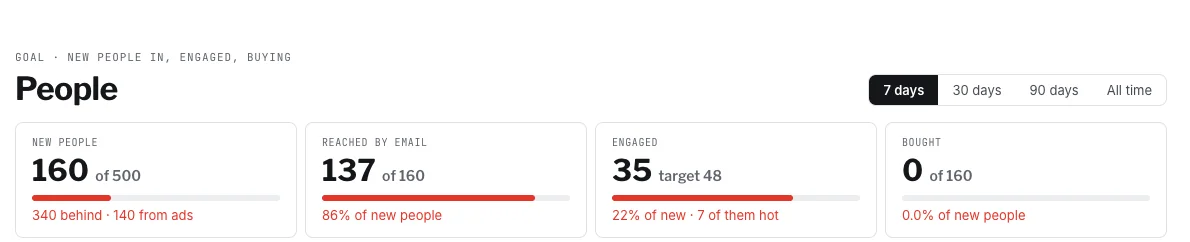
Here are the 7 days to Sunday on the People page:
- 160 new people, 140 of them from ads
- 137 reached by email, 86% of them
- 35 engaged, 7 of them hot
- 0 bought
A handful of yeses I can answer myself. 160 new people a week I can't. Remember the question from day four: who should we be closely connected with, because they're most likely to buy? With this many people, I need the business to tell me.
Our own lead scoring
I first learned lead scoring at my old company, TINYpulse. Mark Roberge was on our board and Mike Volpe was an investor. We were one of the first companies to use a CRM, and lead scoring was the most amazing thing since sliced bread. Every contact gets a score from what they do, and you call the hot ones first.
But it went from being free to being extremely expensive. So I built it myself with Claude, in a day.
Every person gets a score from what they did in the last 30 days. Anything in the last 14 days counts fully. Older actions count half.
| What they did | Points | Up to |
|---|---|---|
| Opened an email | 1 | 3 |
| Clicked an email | 3 | 9 |
| Logged in on a day | 3 | 12 |
| Used a tool or got a reading | 10 | 30 |
| Wrote to us | 10 | 10 |
| Looked at pricing or sign-up, per day | 10 | 20 |
25 points or more is hot. 10 or more is engaged. Anything above zero is warming. Anyone who bounced, complained or asked us not to write scores zero, whatever they did.
The first version was wrong, and it's worth telling you how. It scored 132 of 139 new people as engaged. That sounds wonderful until you see why: the free chart that turns a visitor into a lead was counting as engagement. Everyone who signed up looked keen.
So a tool now only counts from 10 minutes after someone arrives. The numbers dropped to 31 engaged and 6 hot out of 150. Smaller, and true.
The People page now opens with one list: "Write to these people." The hot people who haven't bought, and what they did.
Split by what they want most
A score tells you who is leaning in. It doesn't tell you what they want.
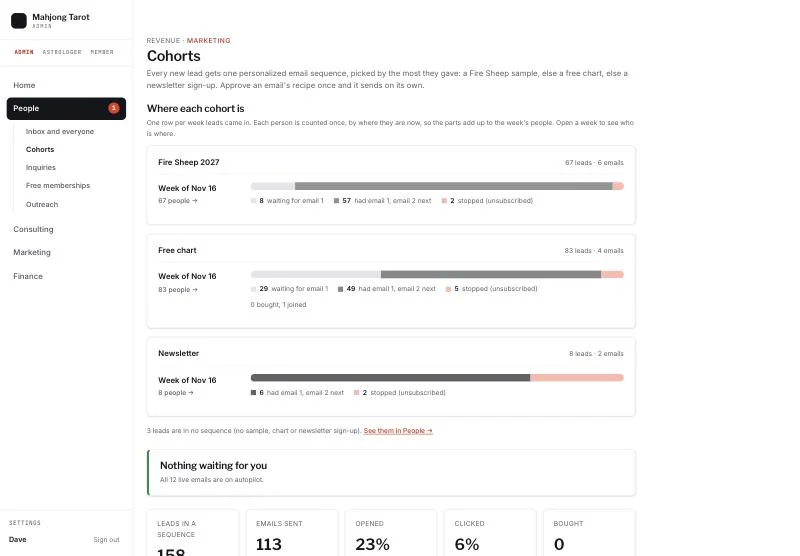
So every lead now goes into one email sequence, picked by the most they gave us:
- Fire Sheep 2027: they asked for a sample of Dad's forecast for the coming year. 67 people.
- Free chart: they got their free chart. 83 people.
- Newsletter: they only signed up for the newsletter. 8 people.
One person, one sequence. On the way we found 33 people who were in two sequences at once, getting two stories at the same time. That's fixed.
A page for every interest
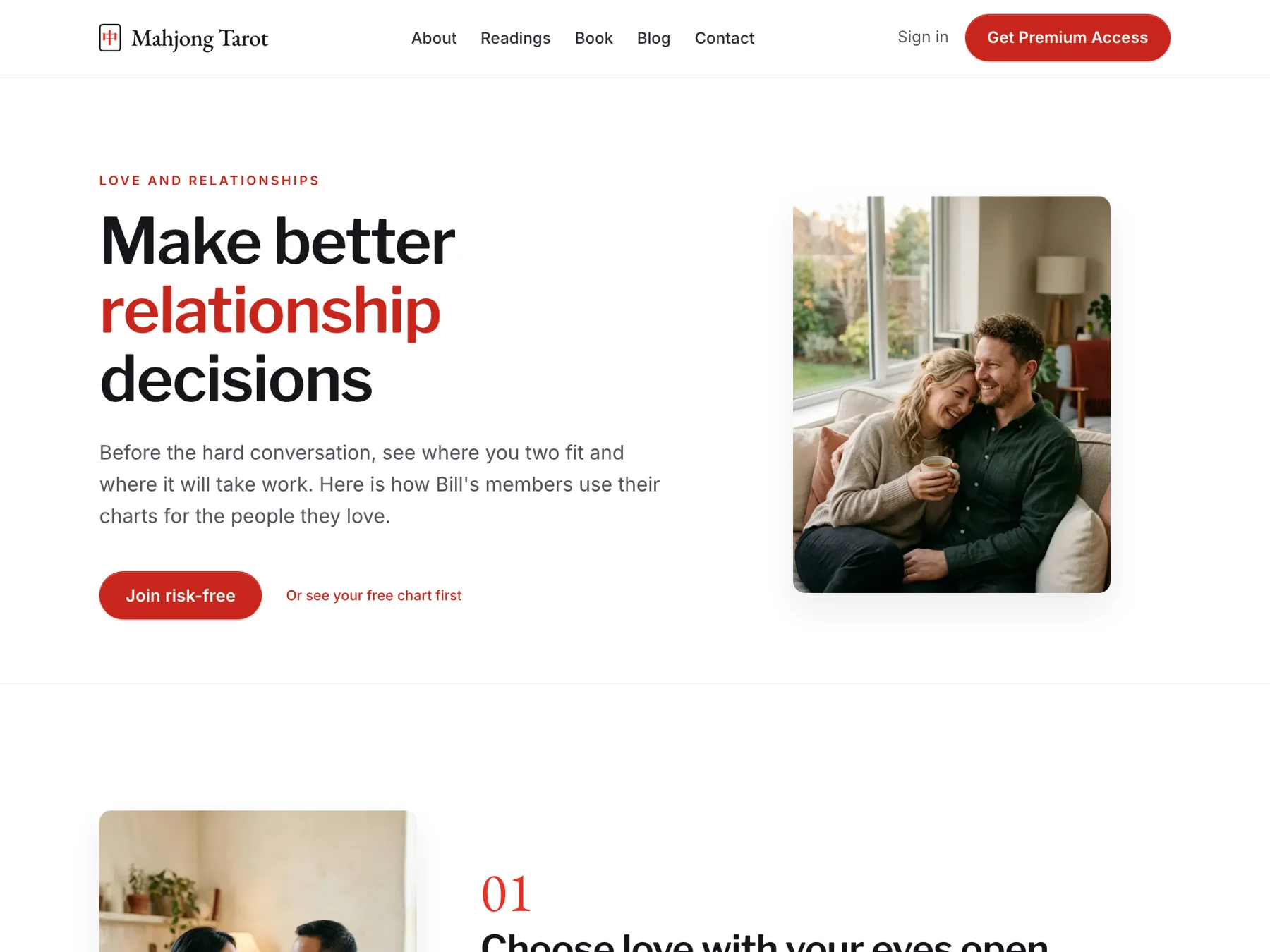
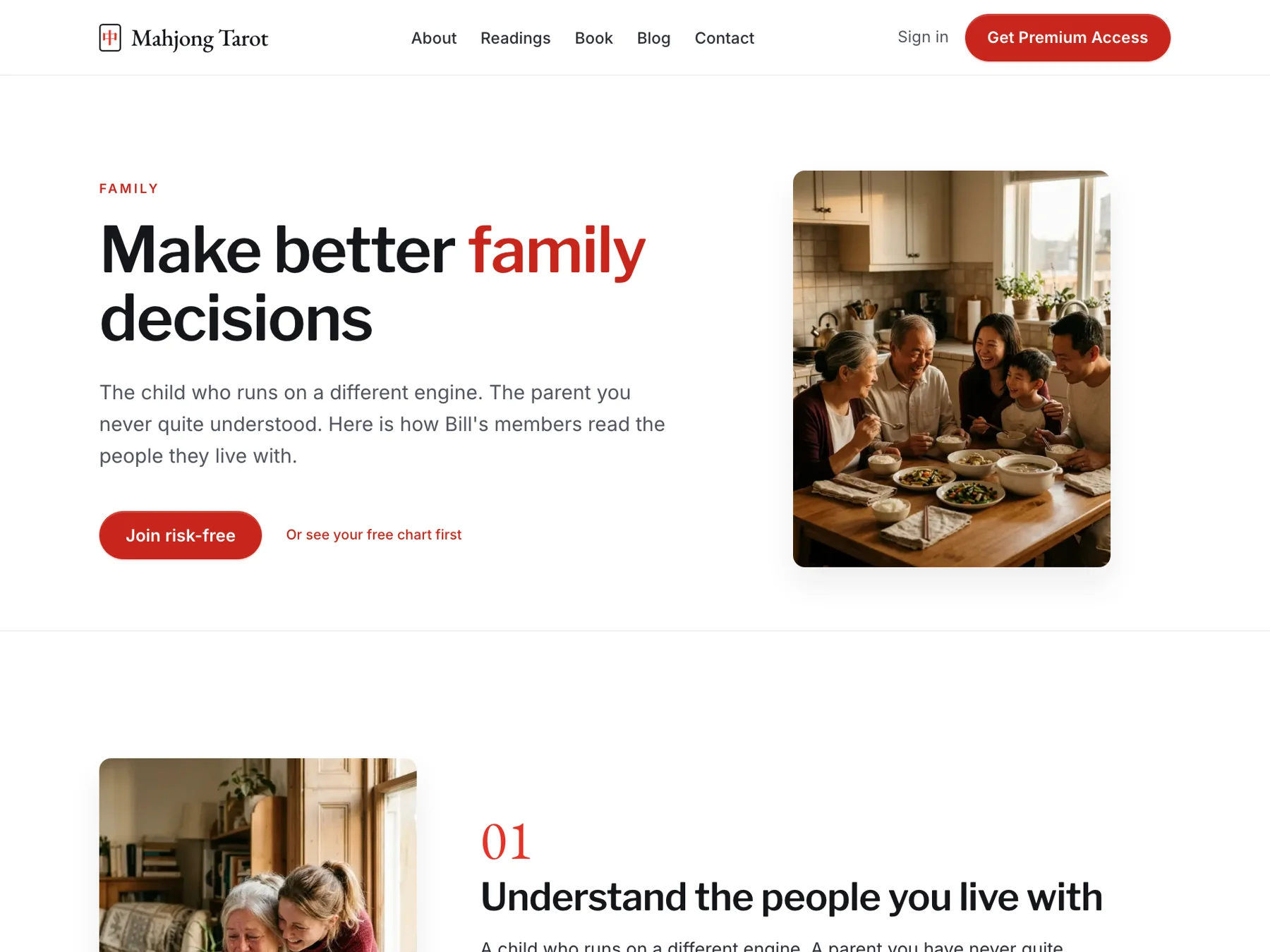
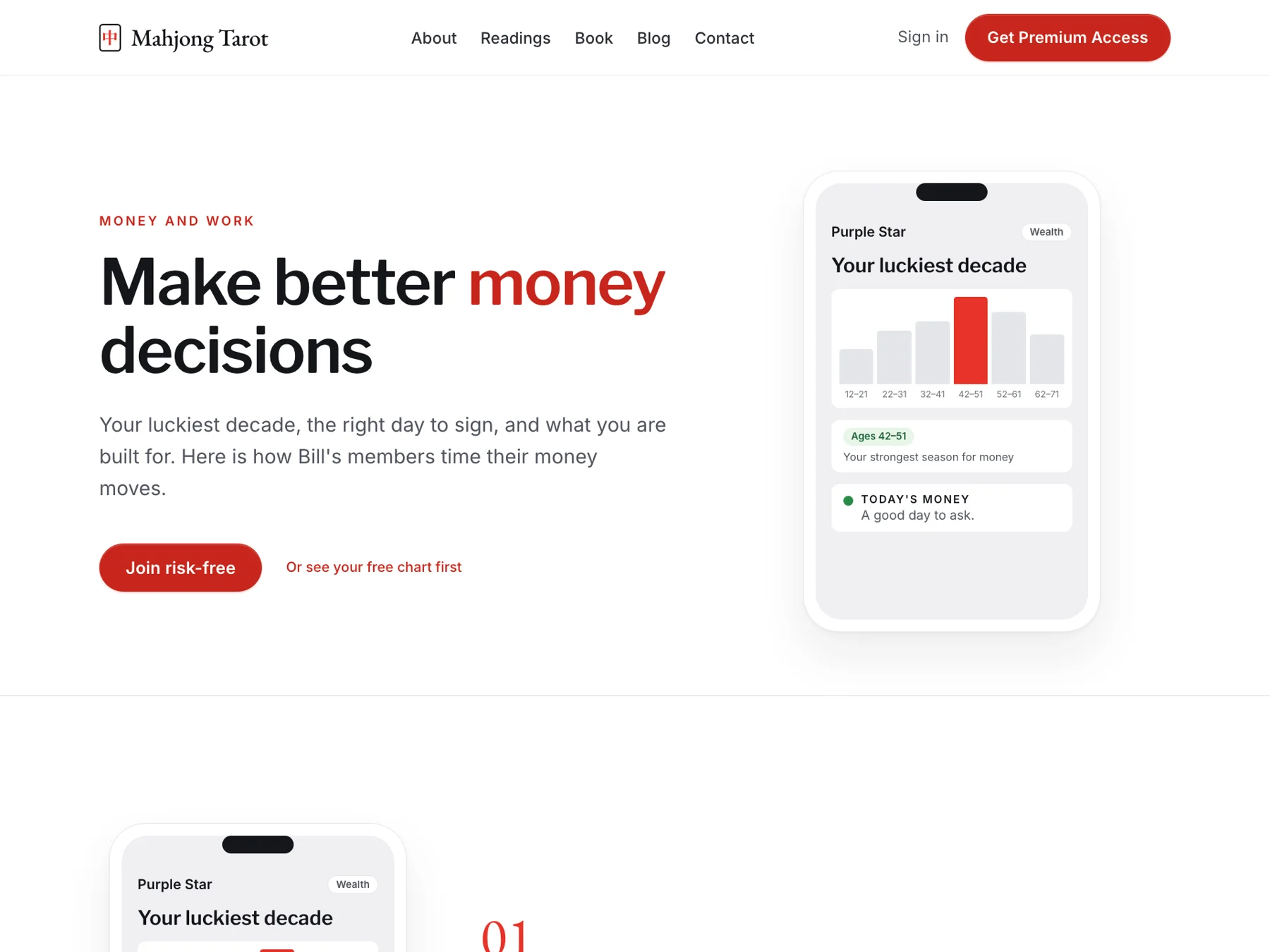
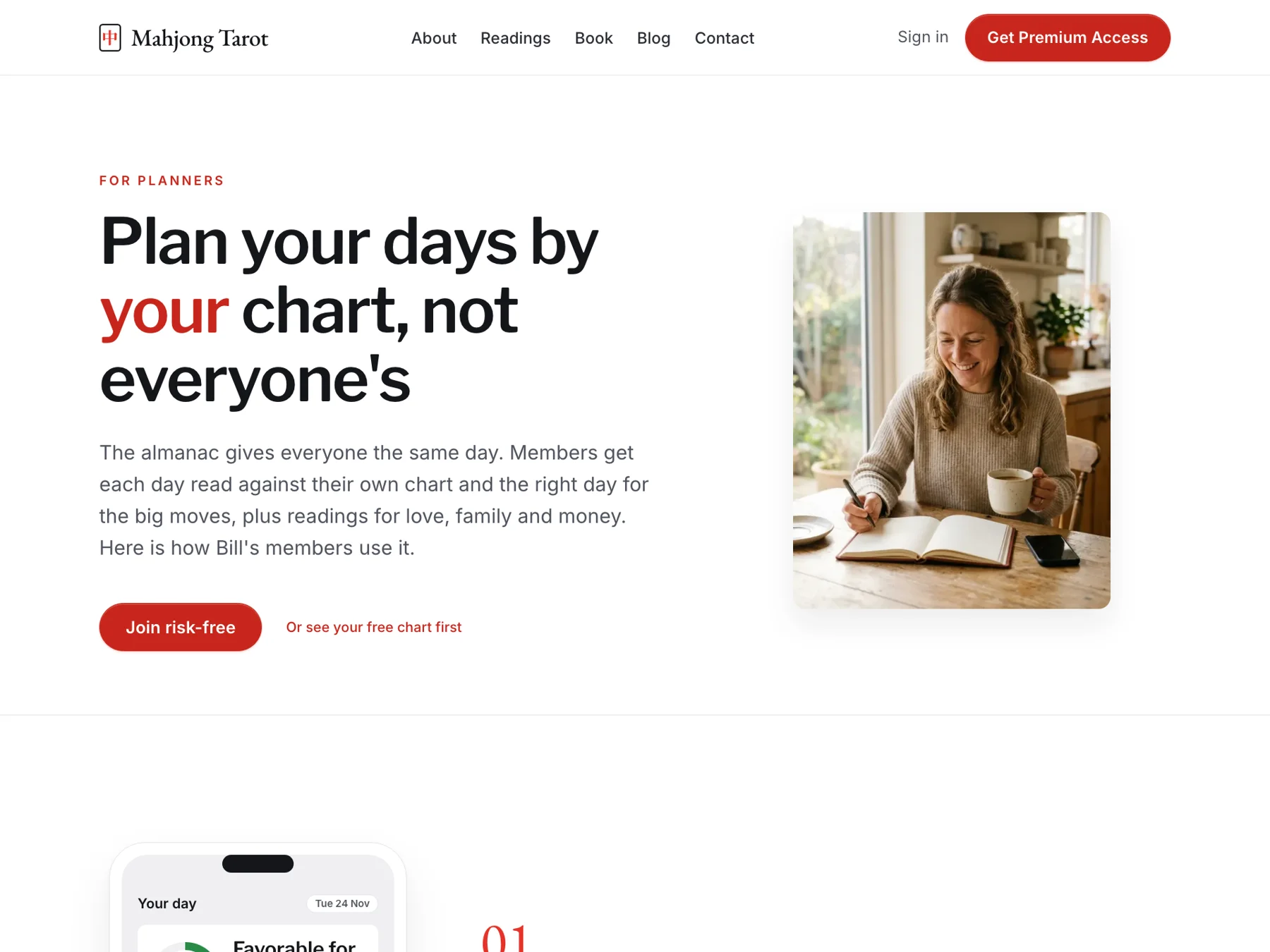
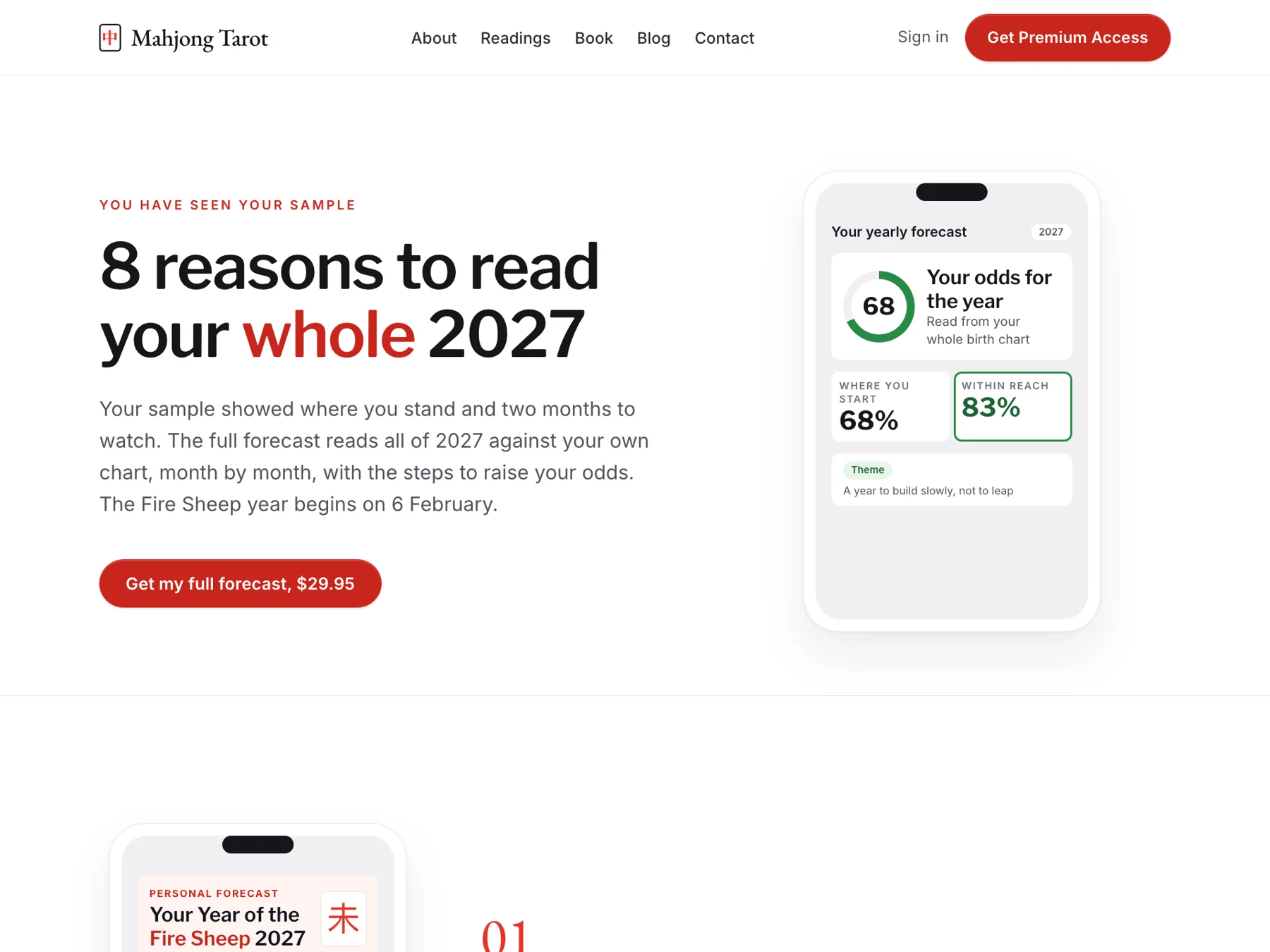
People don't come for "astrology." They come for something specific. So each interest got its own landing page, in its own words: love, family, money and the planner. Fire Sheep sample takers get "8 reasons to read your whole 2027."
The recipe
This is the part I'm proudest of.
Broadcast email is one message to everyone. Hyper-personalized email is one message per person. The trick is doing that without writing two hundred emails a week, and without letting an AI make things up.
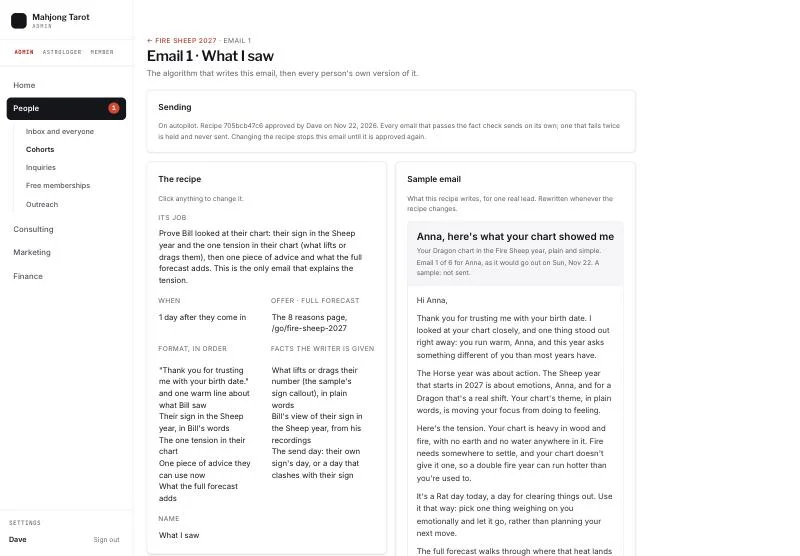
So every email has a recipe. It's a short page that says:
- The job: what this one email has to do.
- When: how long after the last one it goes out.
- The offer: the one thing it points to.
- The format: the parts, in order.
- The facts: the only facts the writer is allowed to use, taken from that person's own chart.
Claude writes each person's own version from the recipe. A second check reads every draft against the facts. Anything that fails twice is held and never sent.
I read a few samples and approve the recipe once. From then on it sends on its own. We call it autopilot. If anyone changes the recipe, it stops until it's approved again.
Each sequence is as long as its story needs:
- Fire Sheep, 6 emails: What I saw, Where it bites, The turning point, Their people, Proof in a day, The deadline.
- Free chart, 4 emails: Who you are, What's missing, A day to try it, Your year.
- Newsletter, 2 emails: Who you are, Your week.
Every first email opens with "Thank you for trusting me." And no two emails in a sequence open the same way, because people notice.
What they actually got
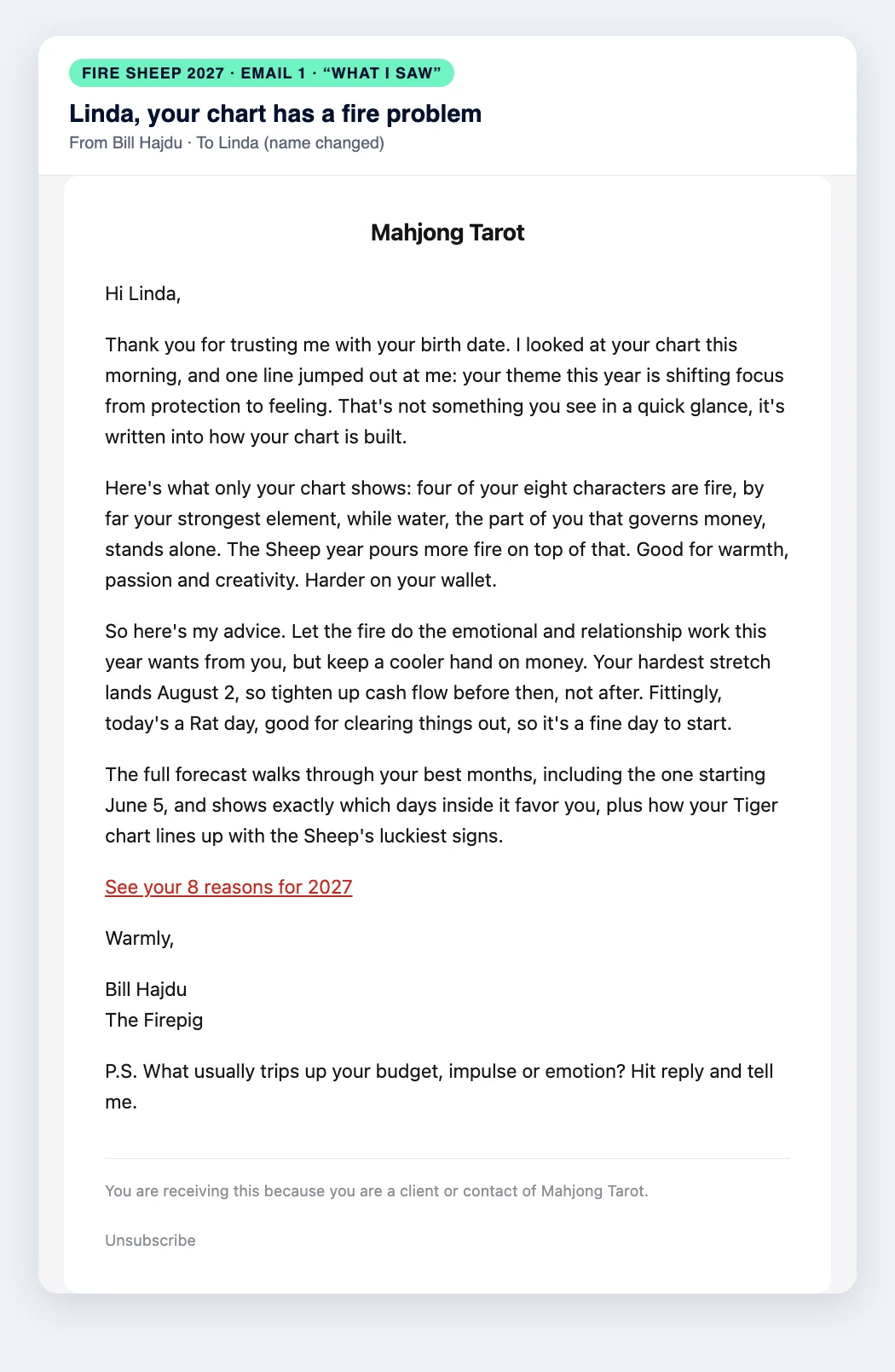
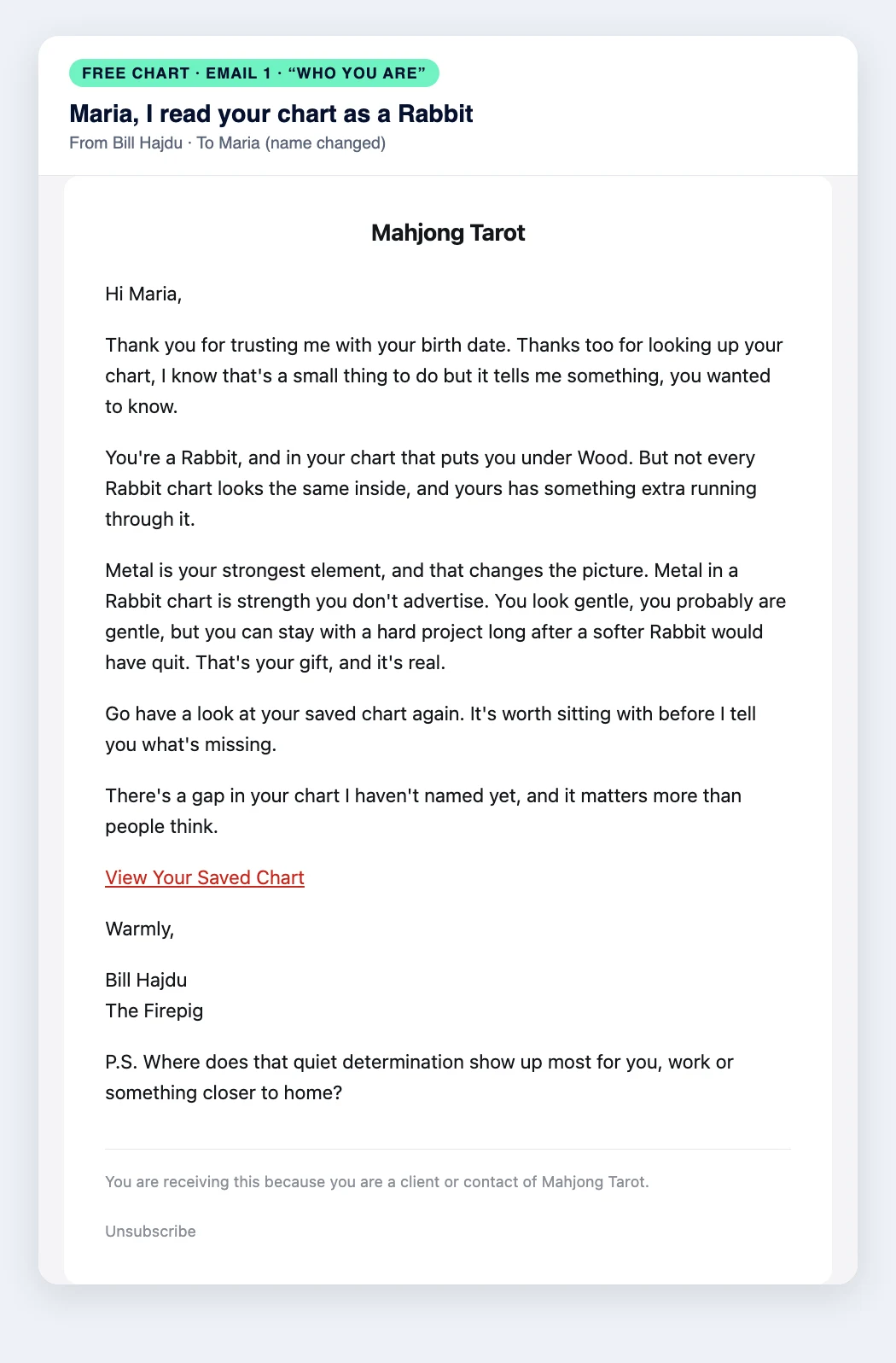
Here are two real first emails, exactly as they went out. Only the names are changed.
The first went to someone who asked for the Fire Sheep sample. Four of the eight characters in that chart are fire, and water stands alone, so the email is about money.
The second went to someone who got a free chart. A Rabbit with Metal as the strongest element, so the email is about quiet strength. Same kind of recipe, a completely different email.
Compare that with the broadcast. Dad's "I finally finished it" went to 35,692 people, all getting the same words. 5.1% opened it.
How it's doing
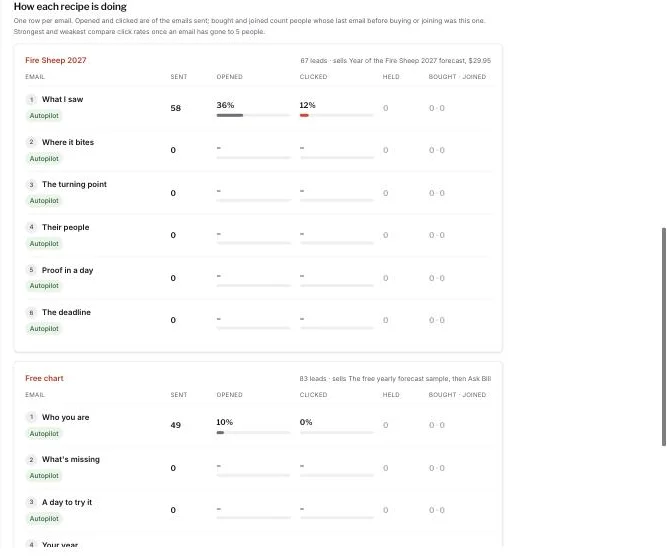
Early, but here it is. 158 leads were in a sequence by Sunday night, and 113 emails had gone out, with none held by the fact check. Most went out that weekend, so on Sunday night only 23% had been opened.
By Monday morning, people had caught up:
- 40% opened and 17% clicked
- Fire Sheep email 1: 58 sent, 50% opened, 22% clicked
- Free chart email 1: 49 sent, 33% opened, 12% clicked
- 0 bought. 1 person joined as a free member.
Half the people who asked for the Fire Sheep sample opened Dad's first email, and one in five clicked. People who give you more, read more. That's the whole idea behind splitting them.
How to do it yourself: a yoga studio
You don't need astrology or a developer. Say you run a yoga studio with 600 past members.
1. Score them
A class booked is worth more than an email opened. Last month counts more than last year. Cap each thing so one habit doesn't win.
2. Split them by what they come for
Yin, hot, prenatal, beginners. One group each.
3. Give each group a page
Write it in their words. Prenatal people don't want to read about hot yoga.
4. Write one recipe per email
Its job, its timing, the offer, the format, and only the facts you actually have. "Hi Anna, it's been 4 months since your last Thursday Yin class" is a fact. "We miss you" isn't.
5. Read the samples, approve once, and let it send
Then answer every reply yourself. That's the part that can't be automated.
Here's a prompt to start with:
You are writing one email for one past member of my yoga studio.
Job: invite them back to the class they used to take.
Offer: one free class this month.
Format: 1) their name and the class they took, 2) one sentence on what's new in that class, 3) the offer, 4) a one-line sign-off from me.
Facts you may use, and nothing else:
- Name: {first_name}
- Last class: {class_name} on {last_class_day}
- Months since: {months_since}
- What's new: {whats_new}
If a fact is missing, leave that sentence out. Never invent one. Under 90 words.
What I'd tell you on day five
A yes is lovely. But the business isn't in the yeses. It's in reading every small signal, from every person, every day, and answering the right people first. A score tells you who is leaning in. A segment tells you what they want. A recipe lets you speak to each of them, without making anything up.
So here is your Monday question. Who on your list is leaning in right now, and how would you know?
If you want help building it, that is what we do at Edge8.